01
Home to Globally Ranked Research Universities
Al-Farabi KazNU ranks #166 globally (QS 2026), the highest-ranked university in Kazakhstan and #1 in Central Asia. L.N. Gumilyov ENU ranks #317 globally.
Gain internationally recognised degrees and unlock global career pathways
Kazakhstan is Central Asia's largest economy and an emerging academic hub, offering affordable education with fully-funded programs at Nazarbayev University and rapidly growing int... Kazakhstan offers something narrow but valuable: recognised degrees at close to the lowest cost of any internationally accredited system, with public university tuition starting around $1,500 a year. Al-Farabi Kazakh National University is globally ranked, the medical faculties are WHO and NMC-recognised, and the country is a Bologna Process participant, so engineering and STEM credits transfer the way European ones do.
Al-Farabi KazNU ranks #166 globally (QS 2026), the highest-ranked university in Kazakhstan and #1 in Central Asia. L.N. Gumilyov ENU ranks #317 globally.
Public Kazakh universities charge international students USD 1,500-5,000/year, a fraction of Western tuition costs, with some fully funded scholarship options.
Kazakhstan is a major destination for MBBS/MD students from India. Medical universities are recognised by WHO, NMC India, and UNESCO.
Kazakhstan's legislation allows international students to work while studying. Check individual visa conditions as rules vary by programme type.
Kazakhstan's unique geographic position at the crossroads of Europe and Asia offers international students unparalleled cultural exposure and regional career opportunities.
Kazakhstan is a participant in the Bologna Process. Degrees are compatible with European higher education standards, with strong STEM infrastructure.
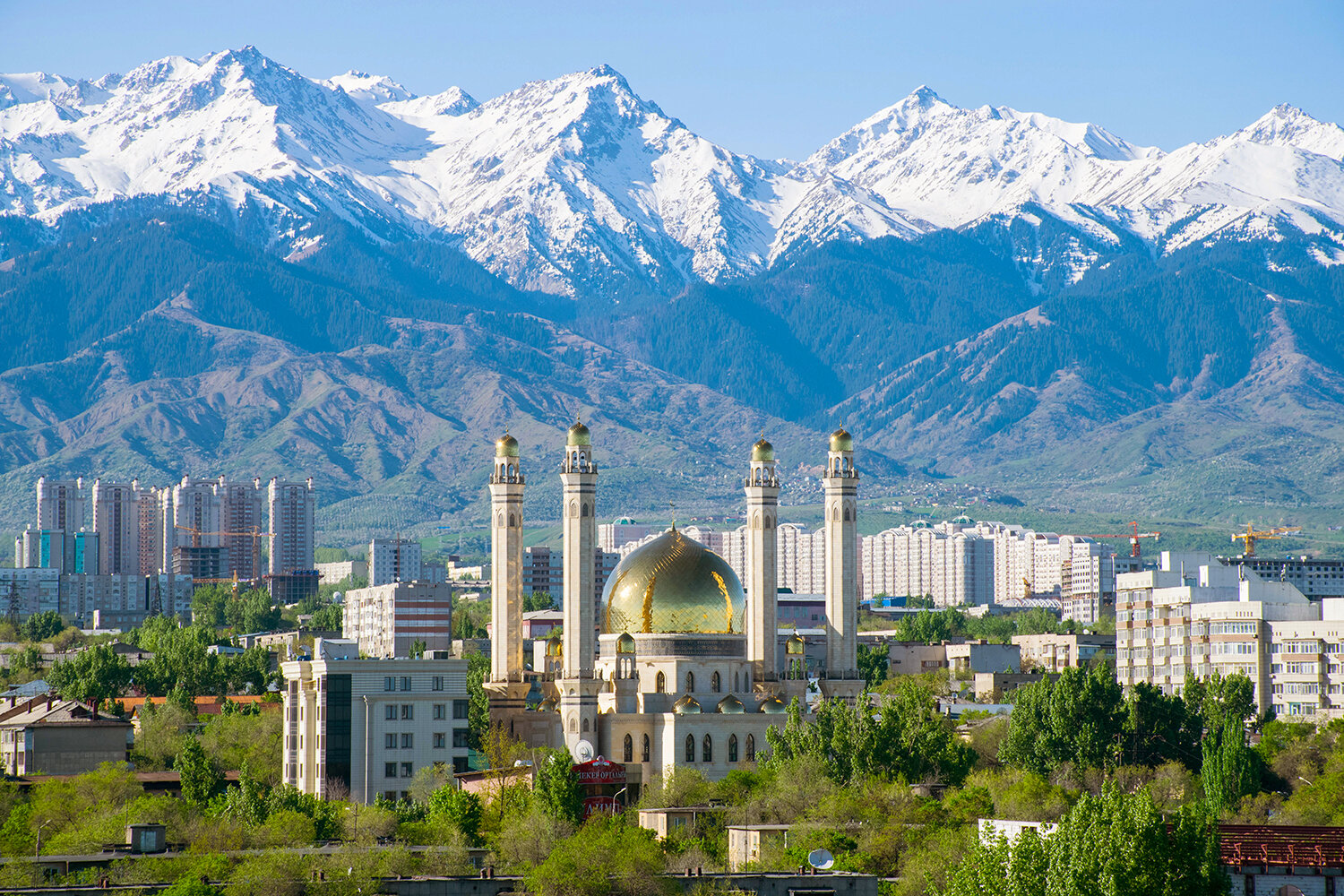
L.N. Gumilyov Eurasian National University Two fields carry most of the demand. Medicine is the larger one, on the strength of NMC recognition and cost. Engineering and the applied sciences are the quieter case and often the better one — Bologna-compatible, taught in English at the larger universities, and priced well below any Western European equivalent. Almaty alone lists more than 900 courses across 38 institutions; Astana adds another 46.
06 Top CoursesL.N. Gumilyov Eurasian National University
Kazakh-British Technical University
Al Farabi Kazakh National University
Satbayev University
L.N. Gumilyov Eurasian National University
Kazakh-British Technical University
Kazakhstan universities run two intakes: September (primary) and February. Apply by June - August for September entry. Nazarbayev University opens admissions separately in February-March. The primary intake is September to October, with a February round behind it. What delays Kazakh admissions is rarely the university: it is document legalisation and attestation, which has to be sequenced correctly and cannot be rushed at the end. Applications should be moving by April for an autumn start, and medical applicants need a qualifying NEET result in hand before an admission letter carries any weight with the NMC.
Kazakhstan universities run two intakes: September (primary) and February. Apply by June - August for September entry. Nazarbayev University opens admissions se...
September - October 2026 Application Open
February 2027
September - October 2027 -
Kazakhstan offers some of the most affordable tuition and living costs among international study destinations. Use this as a planning guide. Public university tuition runs about $1,500 to $4,000 a year at undergraduate level, with living costs in Astana around $350 to $600 a month. That combination is why the page you are reading exists — few systems with recognised medical faculties sit at this price. The trade-off is distance from the graduate job markets most families are ultimately aiming at, and that belongs in the decision alongside the fees.
PhD / Doctoral Often fully funded via state grants * Nazarbayev University offers fully funded undergraduate and postgraduate scholarships covering tuition, accommodation, and living allowance for high-achieving international applicants.
Public universities are the affordable route: tuition runs from about $1,500 to $4,000 a year at undergraduate level, and living costs in Astana sit around $350 to $600 a month. The cheapest option on paper is rarely the right one — recognition, language of instruction and the state of the hostels vary far more between institutions than the fees do, and that is the comparison worth making.
Kazakhstan has medical faculties that meet World Health Organisation listing and the National Medical Commission's requirements, which is why it appears on so many shortlists. Recognition attaches to the institution, not to the country, so it has to be checked for the specific university before you pay anything — and Indian students still need a qualifying NEET result before admission and must pass the Indian screening examination to practise on return.
Yes, and it is the quieter case that often suits students better. Kazakhstan is a Bologna Process participant, so engineering and applied science credits are structured the way European ones are, and the larger universities teach in English. Almaty alone lists more than 900 courses across 38 institutions, with another 46 institutions in Astana.
The primary intake is September to October, with a February round behind it, and applications should be moving by April for an autumn start. What delays these admissions is almost never the university — it is document legalisation and attestation, which has a fixed sequence and cannot be compressed at the end.